The typical plan (2–4 weeks)
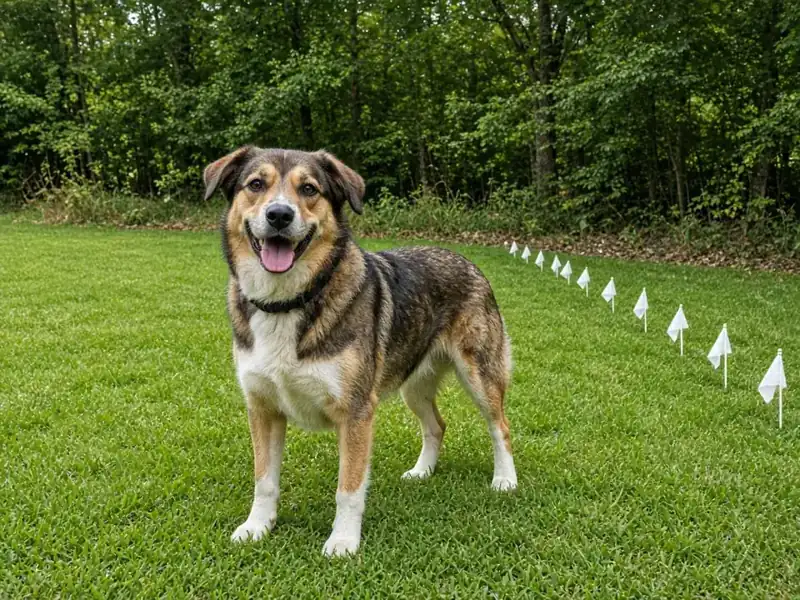
- Days 1–4, learn the flags: on leash, walk toward the flags. When the collar beeps, guide the dog back into the yard and praise or treat. Many trainers keep correction off or at the lowest level here.
- Days 5–10, introduce the correction: at a low level, let the dog feel the correction at the line, then immediately bring it back and reward. Most dogs only need a few.
- Days 10–20, add distractions: toss a toy near the line, have a family member walk by outside, and stay on a long leash.
- Weeks 3–4, supervised off-leash time: stay outside with your dog at first. Remove flags gradually.
Keep sessions short, about 10–15 minutes two or three times a day, and end on a win.
Humane-use basics
- Use the lowest correction level that works. Many dogs end up responding to the tone alone.
- Fit the collar properly and take it off when the dog is inside. Leaving a collar on all day can cause skin irritation ("pressure sores") on the neck.
- Give your dog a gated or uncorrected way to leave the yard on leash for walks.
- Never use the boundary to punish the dog for something else.
Breed and temperament notes
Retrievers, labs, doodles and most herding breeds usually learn quickly. Scent hounds (beagles, coonhounds), huskies and some terriers can be driven enough to run through a correction when a deer or rabbit goes by, which is common on wooded lots around Ada and Rockford. They may need more training, a wider warning zone, or supervision.
When not to use a hidden fence
- Dogs with aggression toward people or other dogs
- Very anxious or noise-sensitive dogs
- Young puppies (most trainers wait until about 6 months)
- Situations where the dog must be contained reliably for safety or legal reasons
- Homes where loose dogs or wildlife getting into your yard is a concern. A hidden fence doesn't keep anything out.
Winter training tips
Lake-effect snow buries flags and changes how the yard looks to a dog. Some dogs test the line again after the first big snow. Re-flag the boundary on top of the snowbank if needed and do a short refresher. Check collar batteries more often when it's cold.
Training questions
What age can a puppy start hidden fence training?
Many trainers suggest waiting until about 6 months, when a puppy can focus through short sessions and fits a collar properly. Ask your vet or trainer about your dog.
My dog ran through the boundary. What now?
Don't call the dog back across the boundary, since it may get corrected coming home. Walk the dog back in through a gate area with the collar off, then check the battery, collar fit and correction level, and go back a step in training.
Should the flags come down?
Yes, gradually. Once the dog consistently turns back at the warning tone, remove every other flag every few days until they're gone, usually within a few weeks.